
Silicon carbide (SiC) devices are moving beyond a handful of early high-end applications into a much broader range of power and drive designs. But treating SiC as a drop-in replacement for silicon is a common misconception — the material behaves differently, and that means rethinking several parts of the design, not just swapping a part number.
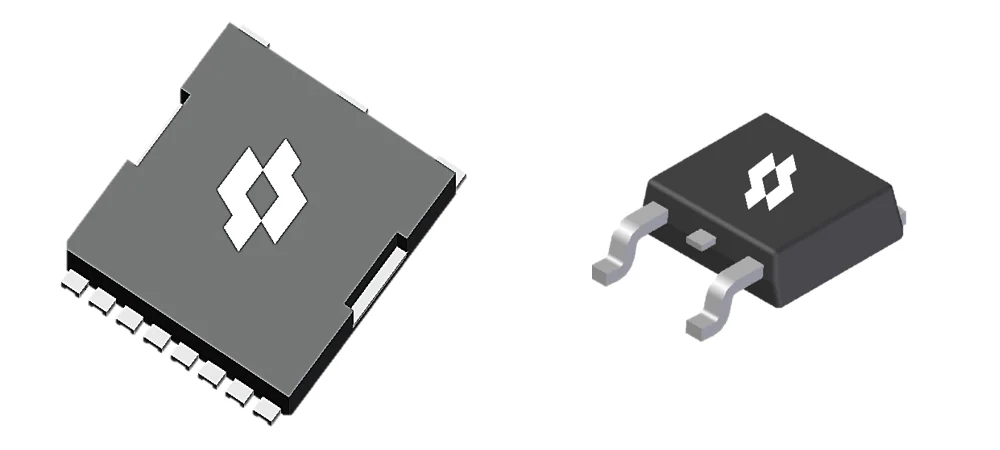
SiC MOSFET and SiC SBD packages. Image: SineSemi
First, the efficiency gains and the thermal budget both need to be re-planned. SiC's conduction and switching loss curves differ from silicon's, with the advantage growing more pronounced at higher switching frequencies — opening room for higher power density. But realizing that room requires redesigning the thermal path, EMI strategy and heat-management approach alongside it; carrying over silicon-based thermal design experience unchanged tends to under-budget or mismatch the actual thermal load.
Second, gate-drive circuitry needs recalibration. SiC MOSFETs differ from silicon devices in gate threshold voltage, drive-voltage window and switching speed. Gate-resistor selection, negative turn-off bias design and drive isolation all need targeted tuning — otherwise parasitic turn-on, ringing or overshoot can creep in and erode the very performance gains the device was chosen for.

SiC MOSFET in a TO-247-4L package with a separate driver-source (Kelvin) pin
Third, cost needs to be evaluated at the system level. A single SiC device typically costs more than its silicon counterpart of the same rating, but the smaller magnetics and heatsinks enabled by higher switching frequency, plus the energy savings from higher system efficiency, often offset part or all of that price gap at the finished-system level. Engineering and sourcing need to work through the total system cost jointly, rather than comparing per-device quotes alone.
SiC's shift from "high-end specialty" to "mainstream option" means selection decisions need to move from single-parameter comparison toward system-level evaluation done jointly with the supply chain. For a specific part's parameters and alternative paths, the on-site selection tool handles the first pass; system-level evaluation is where our engineers step in.