
Moving to local alternatives for power devices is a topic engineering and sourcing teams can no longer avoid, but an adoption decision that stops at "the datasheet parameters look aligned" tends to surface unexpected problems once production ramps to volume. A more practical path breaks the transition into three progressive stages — parameter matching, small-batch validation, and volume rollout — rather than switching suppliers in one step.
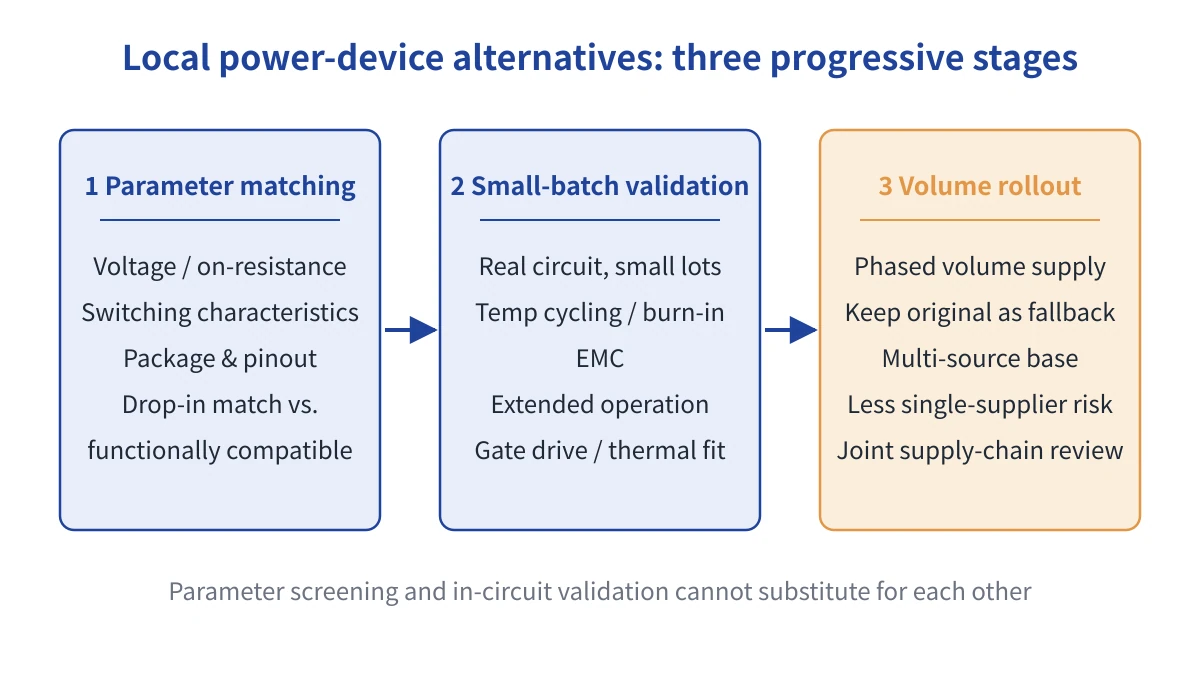
The three progressive stages of adopting a local alternative
The first stage is parameter matching: comparing electrical parameters item by item — withstand voltage, on-resistance, switching characteristics, package dimensions and pinout — to establish the candidate device's performance envelope at the key operating points, and to separate parts that are genuinely drop-in matches from those that are only functionally compatible and still need in-circuit verification. The goal here isn't finding the part that "looks closest," but filtering down to candidates genuinely worth carrying into the next stage.
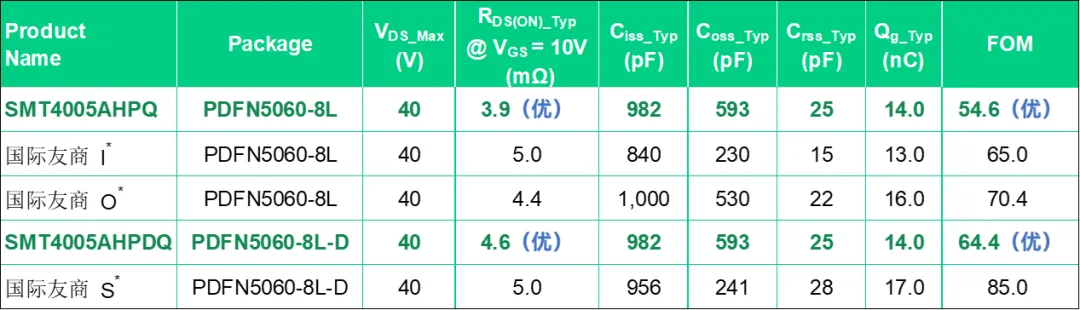
Example parameter-matching table: candidate parts compared item by item against benchmark parts. Image: SineSemi
The second stage is small-batch validation. Parameter matching is only a filter; real reliability conclusions come from small-batch testing in the actual circuit — temperature cycling, burn-in, EMC, and extended operation under representative conditions — to confirm the candidate performs consistently with the original design in the specific application, not just under ideal bench conditions. This stage is also the key window for catching gate-drive mismatches, thermal-design gaps and other details that parameter comparison alone would miss.
The third stage is volume rollout and supply-chain management: once validation passes, bring in volume supply in phases while keeping the original design as a fallback path, gradually building a multi-source supply base to reduce dependence on any single supplier. This also echoes the methodology behind parameter-level cross-reference tools — systematic parameter screening first, followed by in-circuit engineering validation; neither stage can substitute for the other.
A practical path to local alternatives isn't about speed — it's about making sure every stage can withstand scrutiny. The parameter-matching stage can start with an item-by-item comparison in the on-site tool; before moving to small-batch validation, have our engineers check the candidate part against the operating conditions.